
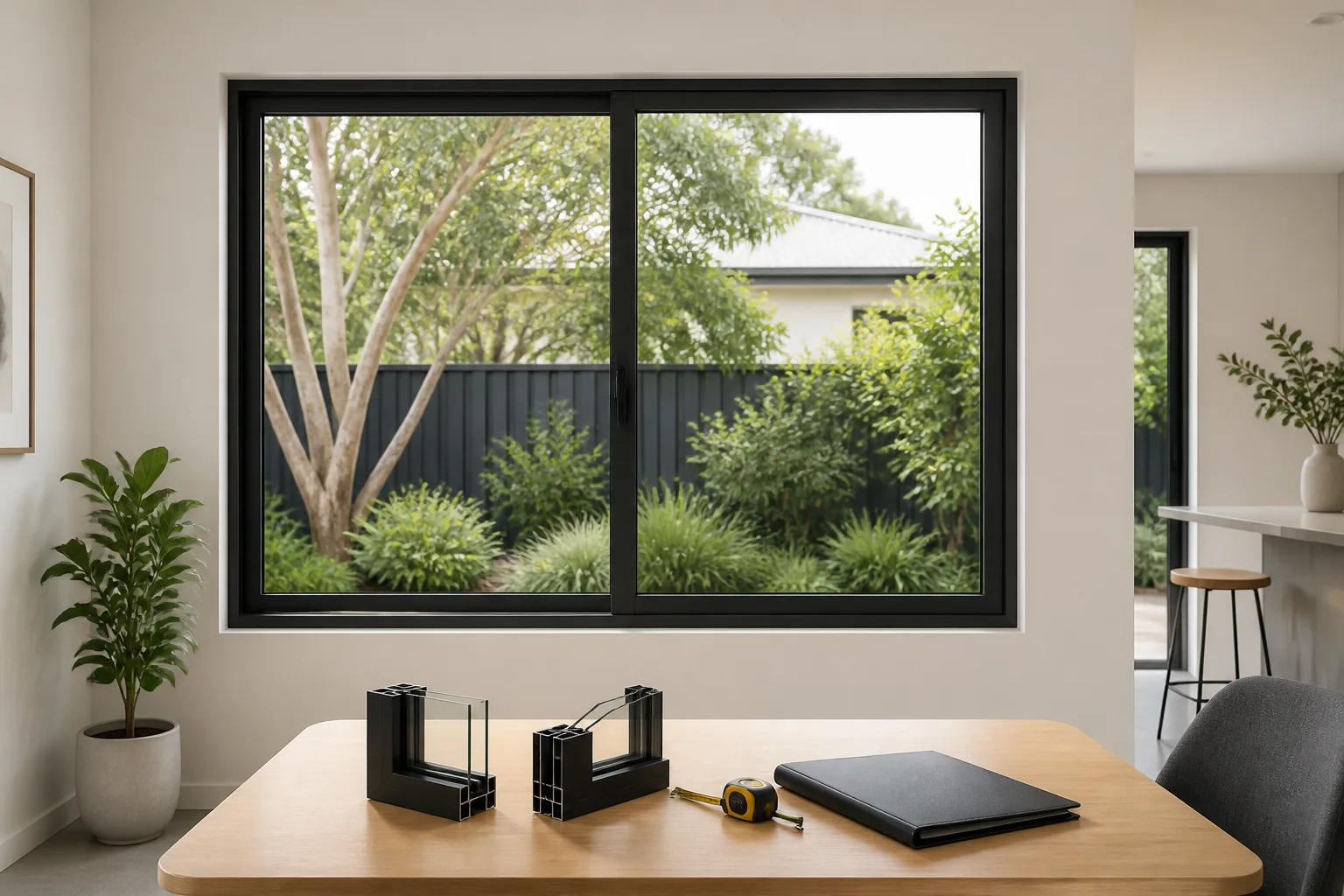
For a current sliding aluminium window price in Australia, use online figures only as a budget check and obtain an itemised project quote. A January 2026 Australian cost guide published indicative supply-only examples from about AUD $165 to $680 for several listed standard-size sliders, but those figures are not Forge prices and do not include every glass, screen, freight or installation requirement.
Key takeaways
- There is no reliable national price per window without dimensions, configuration, glass and supply scope.
- Separate supply-only cost from delivery, removal, installation, flashings, trims and making good.
- Compare whole-window performance evidence, not just “single” or “double glazing”.
- A standard-size quote and a custom project window are not like-for-like.
- Send every supplier the same schedule so price differences can be traced to specification or scope.
What is a realistic sliding aluminium window price?
The honest answer is a range, not one number. The current hipages 2026 aluminium-window cost guide lists several supply-only sliding-window examples between AUD $165 and $680, depending on the stated size. It labels its figures as national averages and advises buyers to get quotes. Treat that range as secondary-market guidance dated 22 January 2026, not a live supplier offer or an installed project allowance.
A project price may sit outside that band. Custom dimensions, additional sashes, double glazing, Low-E coatings, thermal breaks, non-standard colours, screens, acoustic targets, upper-storey access or replacement work can materially change the scope. Regional freight and site conditions also matter.
| Budget stage | Useful price input | What it cannot confirm |
|---|---|---|
| Early feasibility | Dated public cost guide with size and supply basis | Your final frame, glass, testing or installation |
| Design development | Supplier budget quote against a window schedule | Final site dimensions and approved details |
| Pre-order | Itemised quotation with drawings, evidence and exclusions | Unforeseen concealed conditions in replacement work |
| Construction | Approved order and installation scope | Changes not recorded through the agreed variation process |
Seven factors that change aluminium slider pricing
- Overall size and panel arrangement. A two-panel bedroom window, a three-panel living-room unit and a multi-track configuration use different quantities of frame, glass, rollers, locks and seals.
- Standard or custom manufacture. A stock or repeatable module may use established cuts and details. An unusual opening can require project-specific engineering, glass, fabrication and packaging.
- Glass specification. Thickness, safety type, laminated make-up, insulated glass unit, Low-E coating, tint and acoustic design all affect price and weight.
- Frame and thermal design. Conventional aluminium and thermally broken systems should be compared using whole-window values for the quoted configuration.
- Hardware and screens. Roller capacity, locks, restrictors, keyed-alike schedules, flyscreens and security screens are separate decisions.
- Finish and exposure. Powder-coat colour, anodising, coastal environment and required maintenance can change the proposed finish and hardware.
- Project logistics. Quantity, delivery distance, unloading, floor level, scaffold, crane access, protection and programme affect the total.
Start with the Forge aluminium sliding window guide to define panel layout, ventilation, screens and maintenance before asking for prices.
Supply-only price versus installed project cost
A supply-only price usually covers the manufactured window described by the quotation. It may not include site measure, delivery, removal of the existing frame, opening repair, structural changes, sub-sills, flashings, membranes, sealants, reveals, architraves, painting, scaffold, waste or certification.
For replacement work, ask who owns each interface. Removing an old frame can expose damaged timber, corroded fixings, failed flashings or an opening that is not square. Those risks cannot be priced accurately from a product thumbnail.
Installed-cost checklist
- site measure and responsibility for final dimensions;
- delivery, unloading, storage and glass handling;
- removal, disposal and temporary weather protection;
- opening preparation, packers, fixings and sill support;
- flashings, drainage, membranes and sealant interfaces;
- internal and external trims, patching and painting;
- screens, keys, restrictors and hardware commissioning;
- cleaning, handover documents, warranty and maintenance.
Price the required performance—not an assumed upgrade
The Australian Government’s YourHome glazing guide explains that whole-window U-value describes heat transfer, while solar heat gain coefficient (SHGC) describes transmitted solar heat. Both values depend on the glass and frame together. A higher-priced glazing option is only useful when it supports the project’s climate, orientation, shading and energy design.
The Australian Building Codes Board’s NCC Housing Provisions Section 8 covers windows, external glazed doors, glass and human-impact glazing for relevant Class 1 and 10 buildings. The responsible designer, certifier and supplier must identify current requirements and jurisdictional variations.
Ask for evidence applying to the proposed window type, size, glass, hardware and exposure. The Forge WERS guide explains how to compare rated whole-window configurations, while the Low-E versus double-glazing guide helps separate two frequently confused specifications.
Use one quote template for every supplier
Send a window schedule with a unique mark for every type. For each mark, request:
- quantity, overall frame width and height, and panel layout;
- frame series, track arrangement, finish and colour;
- glass make-up and whole-window U-value and SHGC where required;
- locks, rollers, restrictors, screens and keying;
- structural, water and air-performance evidence relevant to the proposal;
- sub-sill, flashing, fixing and installation assumptions;
- price basis, GST, freight, lead time and quote-validity date;
- inclusions, exclusions, warranty and maintenance requirements.
Do not compare only the total. Mark every difference between quotations, then decide whether it is a necessary project requirement, an optional upgrade or a missing item that must be priced.
Request a project-specific Forge quotation
Prepare the project postcode, building type, window schedule, dimensioned drawings, site photographs, quantities, frame colour, glazing and performance targets, screens, access constraints and required date. Submit them through the Forge contact page. Forge must confirm the available system, project suitability, evidence and current commercial terms.
Sources and evidence boundary
The public price range above is a dated secondary estimate, not measured Forge pricing. Product costs and regulatory requirements can change. Confirm the current National Construction Code, state or territory requirements and exact configuration with the responsible professionals before ordering.
Frequently asked questions
How much does a sliding aluminium window cost in Australia?
A January 2026 public cost guide lists selected supply-only examples from about AUD $165 to $680, but a real project can fall outside that range. Size, panels, glass, frame, finish, screens, freight and installation determine the final price.
Is installation included in an online window price?
Often it is not. Check whether the offer includes site measure, freight, removal, opening preparation, flashings, sealants, trims, painting, access equipment and disposal. Ask for all inclusions and exclusions in writing.
Does double glazing double the window price?
There is no dependable universal multiplier. The change depends on glass make-up, unit size, frame system, hardware capacity, handling and quantity. Compare an itemised single- and double-glazed option for the same window schedule.
Can I compare prices per square metre?
A square-metre rate can help early budgeting, but small windows still need frames, locks and labour, while large panels may need thicker glass and heavier hardware. Use rates only with stated configuration and scope.
What information gets the most accurate quote?
Provide project location, opening sizes, panel layouts, quantities, drawings, glass and energy targets, finish, screens, installation scope, access constraints and programme. Consistent information makes supplier quotes easier to compare.